(Click on a photo to start a manual slideshow with captions.)
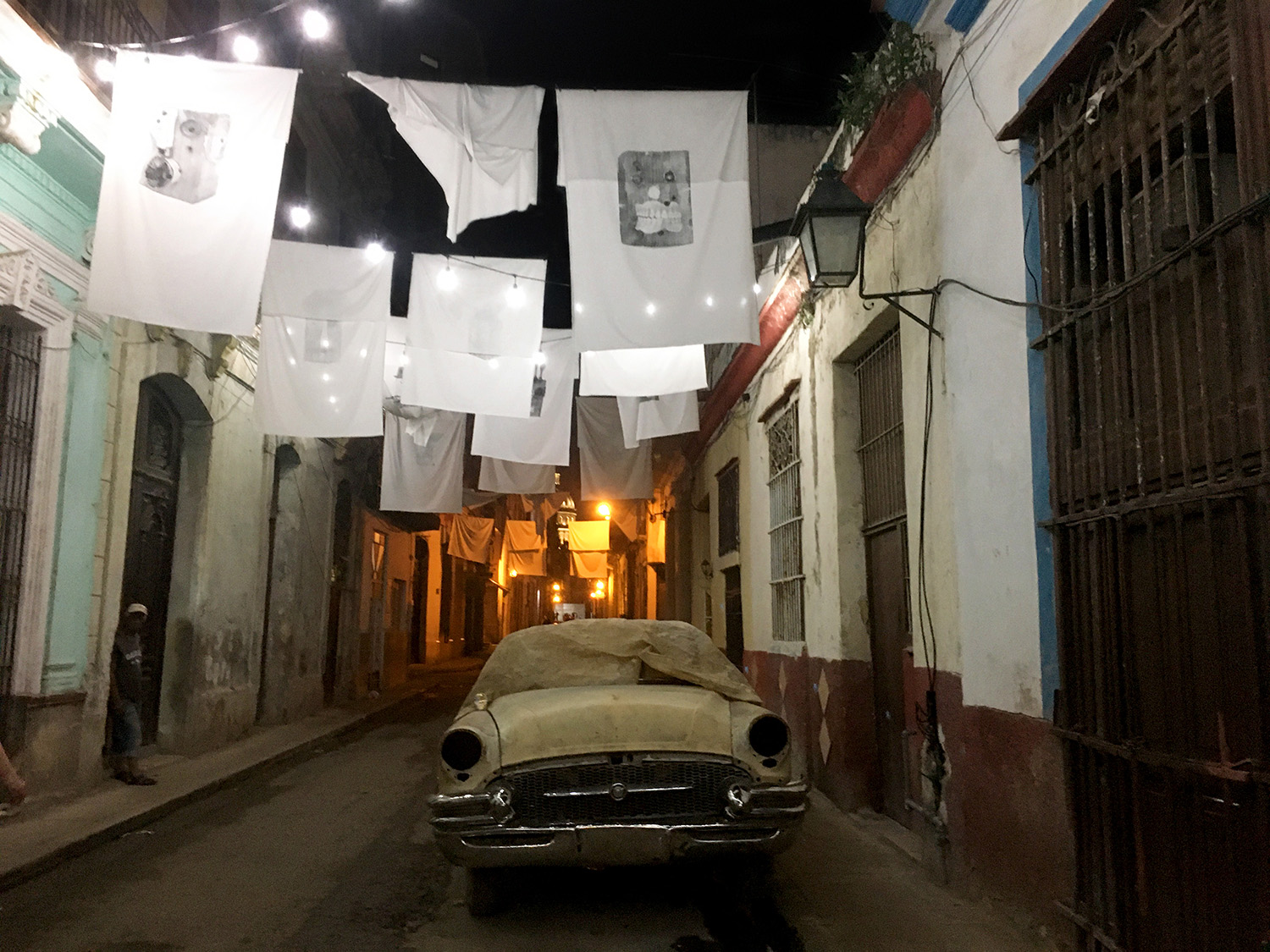
The street where our apartment was located in old Havana.American cars are passed down in Cuban families and are a good source of income. Above, our driver Lester, in his pink Impala.Lester’s pink Impala was passed down to him from his father and grandfather. The only American cars you’ll see in Cuba are from the 1950s before the embargo.The Hotel Nacional de Cuba is off limits to Americans because the U.S. government doesn’t want its citizens spending money that will benefit the Cuban government. However, the Cuban government has no restrictions on Americans staying there or visiting it.I stopped for a few seconds to take some photos of a basketball game. This young man asked me if I wanted to play basketball with him and his friends.In recent years Cubans have been allowed to own small businesses, mostly geared to tourism. This woman sells arts and crafts in Old Havana. Cubans will ride by on anything. It’s not unusual to see them on bikes, horse-drawn carts, and cycle rickshaws, even on the major highways.The view from our balcony in Old Havana.The National Capitol building in Havana is often compared to the U.S. Capitol but it is not a replica. It was built in the late 1920s.Cubans go about their daily lives in Plaza Christo near our apartment. Jasmine, our walking guide, points out a government fruit stand.The shelves are often bare at government stores where Cubans get their rations. The worn buildings are adorned with colors that look as natural as patina on bronze.An image of Che Guevara (above) and Fidel Castro adorn buildings in Revolution Square. The Cuban Art Factory is an art gallery and a nightclub.The light from El Capitolio brightens a dark street in Old Havana.The coffee was strong and sweet at most shops in Havana. A woman strolls one of Havana’s plazas in traditional clothes.AFTERNOON ENCOUNTER: The Cuban people are very friendly and warm.